Denton Hazmat Cleanup For Fuel Spills North Texas Spill Response
If you’re tasked with the job of Denton hazmat cleanup and are trying to clean up a fuel spill at a gas station, you understand the enormity of the situation. You know that not only is cleaning the entire area thoroughly a priority, but getting the area safe in a hurry is vital to getting back to business as usual.
Of course, cleaning up a gasoline spill is more involved than simply throwing absorbent at the pools of fuel. This type of situation requires competence, experience, and an understanding of the steps involved to ensure that the area is properly remediated of all contaminants. At North Texas Spill Response, our skilled HAZWOPER-trained professionals will always act with urgency and take immediate action to mitigate any further damage to your property. And ensure that the impacted areas are safely cleaned.
If you operate a gas station in Denton, Texas, you know that most days are busy as people are running in and out, getting all the essentials to start their day. And, when fuel gets spilt at a gas station, in any amount, it needs to be addressed immediately. Gas spreads quickly, and besides the fact that it’s toxic to people and can harm the environment, it’s also flammable.
Save yourself time and money, and contact North Texas Spill Response before you have a spill. We can provide a free on-site consultation and help you ensure that your business is compliant with regulations. We can even help with your SPCC.
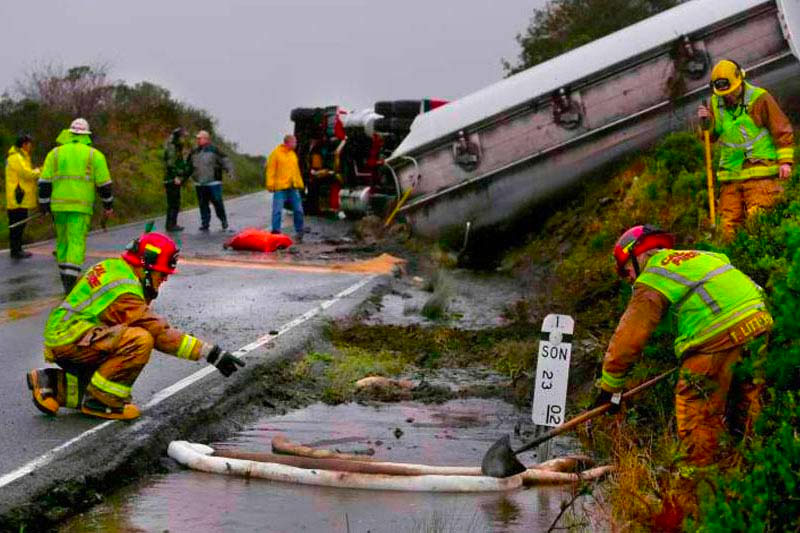
Quick Response Denton Hazmat Cleanup North Texas Spill Response
Preventing Gas Station Spills at the Pump!
When fueling a vehicle, most people have the tendency to put the gas nozzle into their fill tube and then get back in their car. They lock the lever on the spigot so that the gas will continue to flow until the sensor detects that the tank is full. In a perfect world, you wouldn’t need to be concerned about gas spills, but because there’s always the possibility that the sensor on the nozzle will fail to operate properly, you should always pay attention when fueling your vehicle. With gas flowing at 10 gallons per minute, you could inadvertently spill 100 gallons of gas onto the pavement if you’re not careful.
Why Call North Texas Spill Response for Denton Hazmat Spill Cleanup?
You probably didn’t wake up this morning and think to yourself, “I should shop around for a hazmat cleanup company.” Not many people do. It’s no wonder because, thankfully, gas spills and other hazardous material releases don’t occur that often. But, when a spill does happen, wouldn’t it be nice to have a friend in the business you can call?
Well, that’s us, North Texas Spill Response, your friends in the hazardous material remediation business. Now, we’re not some gigantic conglomerate headquartered in New York City. Yes, we’re professionals with training and experience who know just as much as those global organizations, but we’re stationed right here in Denton, Texas. We work and live in the same community that you live in.
Once you choose us for your spill prevention and cleanup services, we’re just a phone call away. Rather than waiting and worrying if an environmental services company from some far-away city will have the ability to marshal their troops locally, just call North Texas Spill Response. Less than a minute after you do, our professionals will be boots-on-the-ground ready and on their way to your spill location.
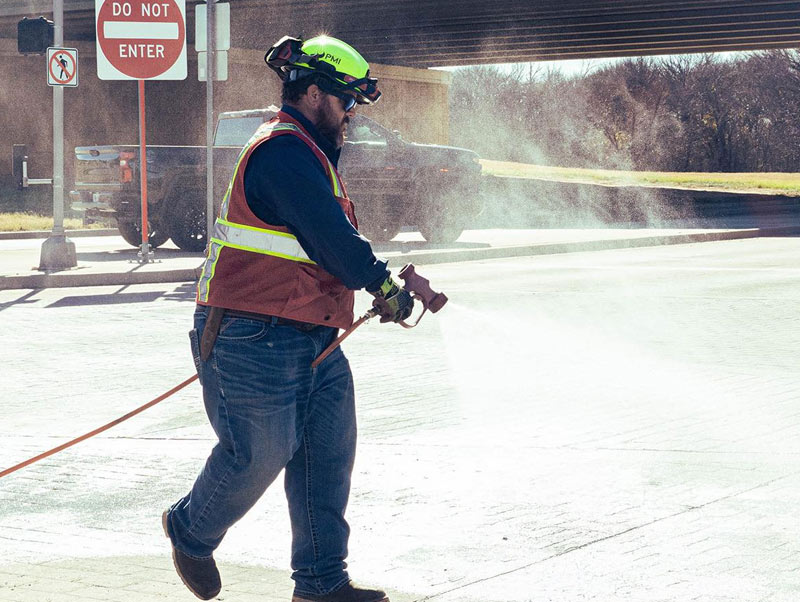
Fuel Spill Cleanup Response Services
Spill Prevention

Is spill prevention really required for my business?
Convenience stores, industrial businesses, and any entity that stores petroleum-based products in large quantities are required to create and maintain a Spill Prevention, Control, and Countermeasure Plan, or SPCC. Taking a proactive approach and planning what events take place during the occurrence of a spill is the best way to prevent a spill from happening in the first place. Contact us for help with your SPCC Plan.
Mitigate Spill Impact
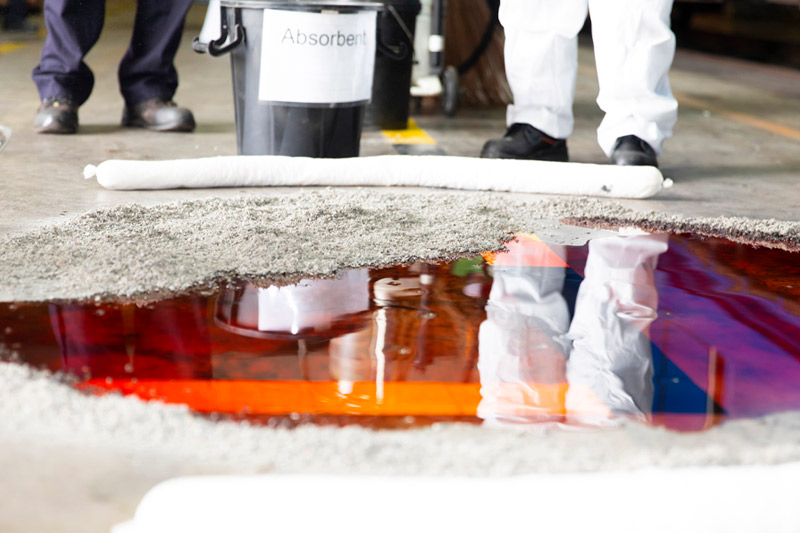
How do I stop a gas spill from continuing to flow?
When you have a gas spill, response time is critical. If you can safely stop the flow of gas yourself by pushing the emergency stop button, do so. If not, immediately call 911 for assistance. Then call North Texas Spill response to mitigate the spread of the fuel spill further. Our priority is to educate our customers so that spill emergencies can be avoided. However, when the need for professional hazmat cleanup response is required, we’re always available.
Remediate Spill Damage
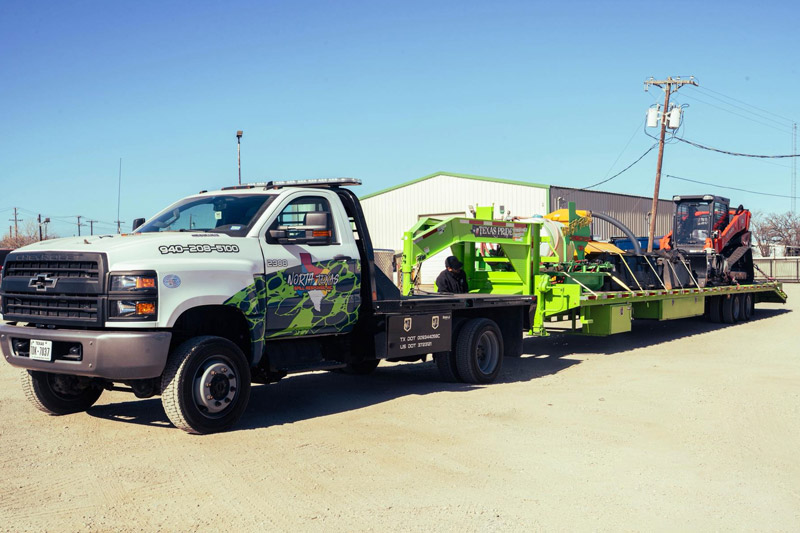
Can you get diesel off of the highway after a diesel spill?
Once the fuel spill has been contained, the next step in the process is to clean up the contaminated areas. Remediation is the process of cleaning up a site that has become contaminated. In most instances, we can remove the majority of the hydrocarbon release from the pavement with a virtually non-hazardous and non-toxic solution that treats the contamination through an immediate chemical oxidation process.
Fast and Local Emergency Spill Response!
If you’ve ever experienced a fuel or oil spill, you know that it didn’t happen at a time that was convenient. You were probably right in the middle of doing something important, but then the spill took precedence as it needed immediate attention. A gas spill is more than a simple irritant. It’s an environmental risk and a problem that can shut your business down for an extended period. That’s why North Texas Spill Response is always available to respond to any type of hydrocarbon release. We’re available 24 hours a day, and we’re right here in Denton, Texas.
At North Texas Spill Response, we work with our clients prior to a spill so that they can be better prepared should a spill occur. Once a spill does occur, a crew of experienced hazardous material technicians makes every effort to get to your location as quickly as possible. We are experienced in cleaning and remediating spills of all types, from gas station spills, tanker rollovers, chemical spills, car accident fluid releases, and many other spills. Our goal with regard to responding to emergency spills is to get to your location as quickly as possible, mitigate the spill, and then address the problem so that contaminants are removed entirely from your property and don’t pose a risk to people and the environment. Contact North Texas Spill Response for a free on-site consultation so that you can be prepared for a spill on your property.
Frequently Asked Questions
Every spill is different — the timeline depends on the type of material released, the volume, the surface it contacted, and whether it reached soil or drainage infrastructure. A contained spill on a sealed concrete floor may be resolved in a matter of hours, while a release that has penetrated a substrate or reached surrounding soil can require additional testing and remediation over a longer period. North Texas Spill Response works as efficiently as possible to get your facility back to safe, operational condition — and we won’t sign off on a job until on-site testing confirms the area is clean and compliant.
At a minimum, your facility should have spill containment supplies appropriate for the types and volumes of materials you store — including absorbent booms, pads, and compatible neutralizing agents. Beyond that, we strongly recommend having a written spill response plan, trained personnel who know their roles in the first few minutes of an incident, and a direct line to a professional hazmat cleanup company already saved and ready to call. North Texas Spill Response offers free on-site consultations to help facility managers assess their current preparedness and identify any gaps before an incident occurs. Being proactive is always far less costly than responding to an unplanned emergency.
Reporting requirements depend on the type and quantity of material released, whether it reached a floor drain, storm drain, or soil, and which regulatory agencies have jurisdiction over your facility and location. Many facilities are required to notify the EPA, TCEQ, or local authorities within a specific timeframe after a hazardous material release. North Texas Spill Response works closely with local, state, and federal regulatory agencies, and we can help you understand your reporting obligations and ensure that your cleanup is fully documented — protecting you from fines or enforcement action down the road.
Yes — and sooner rather than later. Many hazardous materials penetrate concrete, seep into floor drains, or migrate into surrounding soil in ways that aren’t visible to the naked eye. What looks like a clean surface may still harbor contamination that could trigger regulatory action or cause long-term environmental damage. North Texas Spill Response can conduct on-site soil and water testing to assess what was left behind, perform any necessary remediation, and help you document the incident properly in the event that a regulatory agency ever follows up.
The most important thing you can do in the first few minutes is keep people away from the release area, eliminate any nearby ignition sources if a flammable material is involved, and call us immediately at 940-208-5100. Do not attempt to clean up the material yourself unless your team is trained and properly equipped for hazardous material response. Our HAZWOPER-certified technicians are available 24/7 and will mobilize right away. The faster we can get on-site, the better the outcome — both for your facility and for your regulatory standing.
Delays increase spread (costly soil/water remediation), traffic impacts, regulatory exposure, and reputational harm (incidents can draw public attention). Prompt control/cleanup is the most cost-effective path to closure.
By operating under HAZWOPER programs (hazard assessment, PPE, air monitoring, decon, medical oversight) and coordinating with ICS for scene control. This reduces risk to responders, employees, and the public.
Location (with best access), material and estimated amount, whether it’s still releasing, immediate hazards (fire/traffic/confined space), exposures (drains/waterways/soil), and any actions already taken. This matches the “who/what/where” emphasis in Texas spill reporting.
Yes—North Texas Spill Response is woman-owned and serves the DFW/North Texas region. Local expertise means faster arrival and familiarity with area agencies and requirements.
Identify likely spill sources, RQs/contacts, immediate actions (stop/contain), site maps (drains/waterways), PPE, materials on hand (pads, booms, drain covers), vendors (response, transport, disposal), and training/drills. Align with SPCC principles if applicable.
Sometimes yes, sometimes no. It depends on substance, amount, location, and whether there’s a threat to water/air/land. TCEQ’s Reportable Quantities table governs Texas reporting; federal thresholds also apply. When in doubt, call us—we’ll help you interpret and act fast.
By deploying booms, absorbents, drain covers/berms, and vacuum recovery, following EPA discharge prevention/containment principles and state best practices to protect storm systems and surface waters.
Yes—proper response includes source control, media recovery, and, when needed, confirmatory sampling and regulated disposal (or treatment) to meet closure requirements. North Texas Spill Response’s scope includes cleanup and remediation for petroleum impacts.
Vehicle crashes with tank punctures, loading/unloading mishaps, overfills, line breaks, storage tank failures, and facility equipment leaks. Recent Texas events (e.g., highway diesel spills; refinery releases) show the value of rapid containment to minimize closures, impacts, and costs.
Spill response integrates via ICS under the Incident Commander. Responders operate within hot/warm/cold zones, coordinate traffic and scene safety, and support containment/cleanup while public safety agencies manage incident control and demobilization.
Look for teams trained to OSHA HAZWOPER (29 CFR 1910.120) and familiar with ICS (Incident Command System) used by first responders. HAZWOPER covers emergency response programs, PPE, decon, and medical surveillance for uncontrolled releases. At North Texas Spill Response, our technicians are HAZWOPER certified and experienced to handle your hazardous material release.
Generally, the owner/operator whose activities or equipment caused the release is the responsible party. They must report, contain, clean up, and handle waste properly; failure can bring enforcement actions. (Think: state RQ rules, federal discharge rules.)
A complete incident file typically includes substance ID, volumes, timelines, containment/cleanup steps, disposal manifests, and post-cleanup verification. North Texas Spill Response provides response actions plus guidance that aligns with TCEQ and EPA reporting/recordkeeping expectations, helping reduce liability.
We mobilize for immediate petroleum-based spill response, secure the area, stop the source, contain, recover/neutralize, remove impacted media (pads, soil), and coordinate site cleanup/remediation to return the area to safe conditions. North Texas Spill Response serves Dallas–Fort Worth and the areas surrounding North Texas.
Releases at or above a federal Reportable Quantity (RQ) listed under CERCLA require immediate reporting to the National Response Center (NRC), separate from oil rules; Texas state reporting may still apply.
If oil reaches navigable waters or adjoining shorelines, the discharge must be reported under 40 CFR Parts 110 and 112 (SPCC). That’s in addition to any state reporting.
If the amount meets a reportable quantity (RQ) or threatens water/air/land, the responsible party must report “as soon as possible but no later than 24 hours” to the Texas Spill Reporting Hotline (1-800-832-8224) or the appropriate TCEQ regional office. Federal reporting may also apply.
Prioritize life safety (keep people upwind and out), identify the substance if safe to do so, stop the source if it’s low-risk (e.g., close a valve), and call professional spill responders immediately. Early actions focus on control/containment to prevent spread into soil or storm drains.
Areas We Serve
Dallas, Texas
Arlington, Texas
Fort Worth, Texas
Plano, Texas
Mckinney, Texas
Sherman, Texas
Gainesville, Texas
Denton, Texas
Decatur, Texas
Justin, Texas
Irving, Texas
Garland, Texas
Aubrey, Texas
Pilot Point, Texas
Cross Roads, Texas
Tioga, Texas
Sanger, Texas
Northlake, Texas
Grand Prairie, Texas
Haltom City, Texas
Carrollton, Texas
Roanoke, Texas
Prosper, Texas
Weatherford, Texas
Red Oak, Texas
Mansfield, Texas
Midlothian, Texas
Rockwall, Texas
Greenville, Texas
Balch Springs, Texas
Mesquite, Texas
Newark, Texas
Corinth, Texas
Southlake, Texas